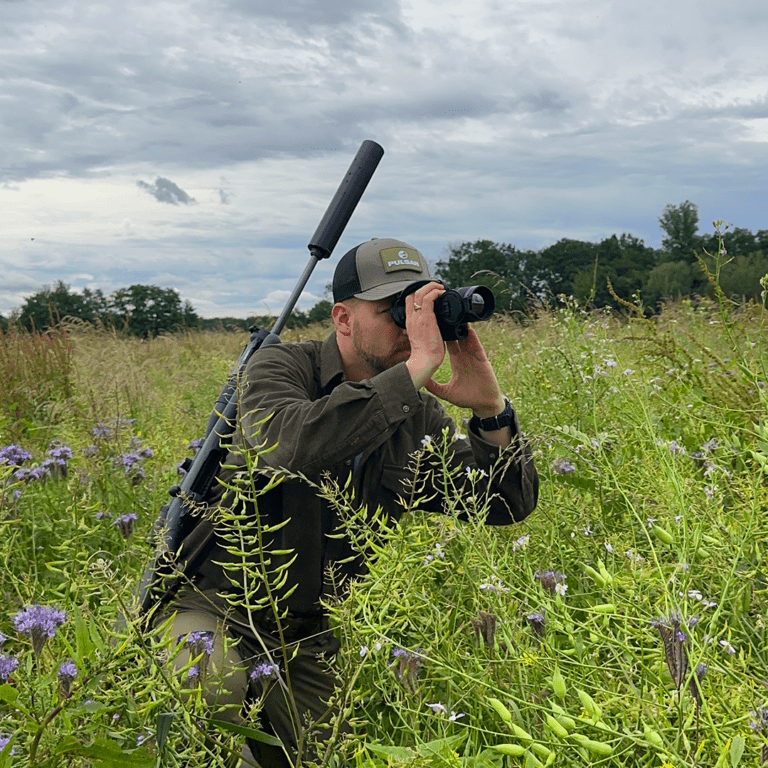
As the wide range of night vision equipment can be overwhelming, we'll try to give you some important criteria to choose the best one for you.
Today, the range of night vision equipment has grown quite wide. There are different manufacturers and a wide range of models to choose from. Choosing can be particularly difficult for those who are buying their first night vision device and have no significant previous experience.
Night vision vs thermal imaging camera
Generally speaking, night vision equipment refers to both classic night vision devices and thermal imaging cameras.
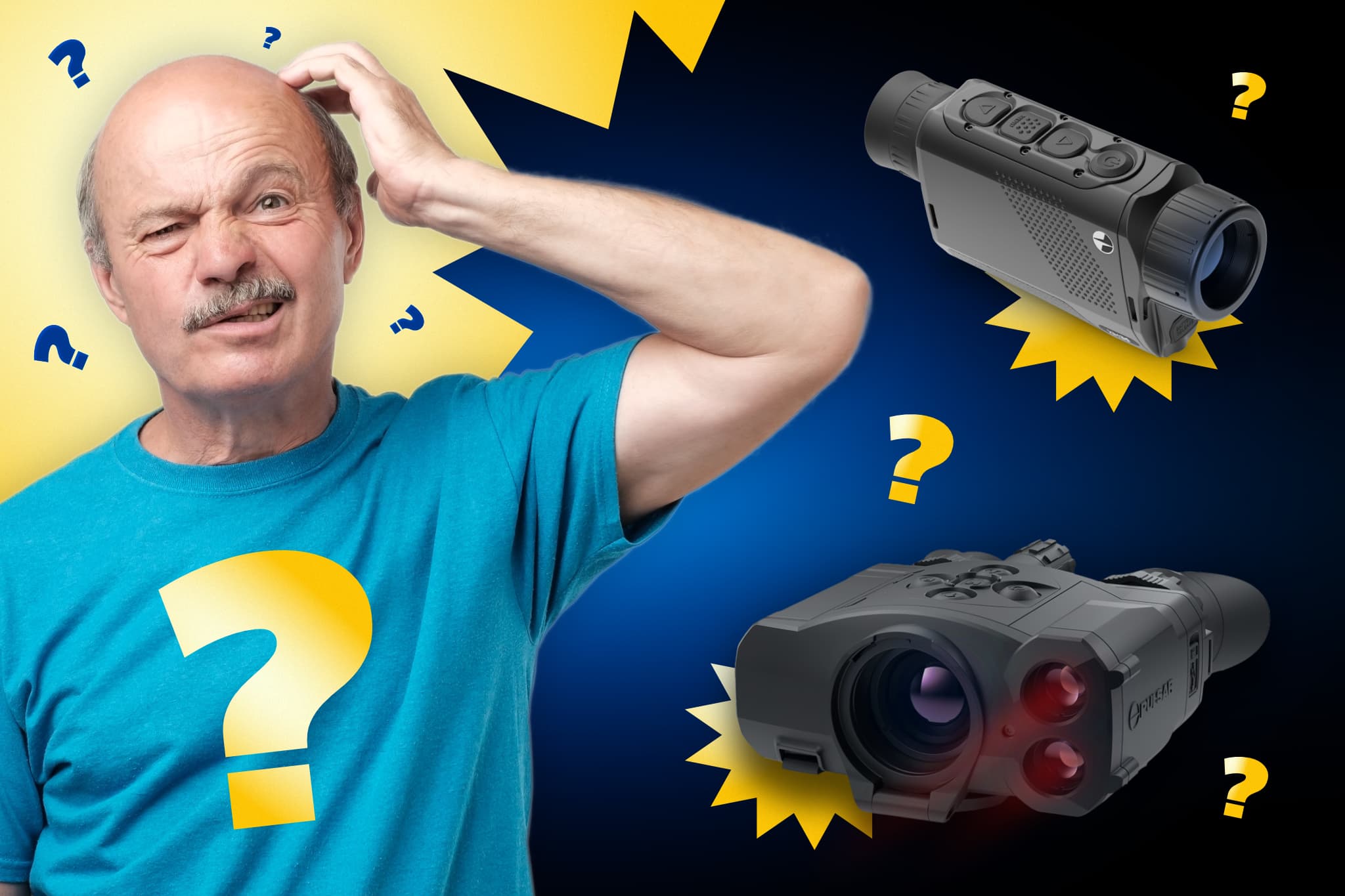
The first distinction should be made between. night vision and thermal camera. Both allow night-time observation but operate in significantly different ways. Classic night vision devices are usually more affordable than thermal imaging cameras.
| Feature | Night Vision | Thermal camera | |
|---|---|---|---|
| Generation I | Generation II+ | ||
| A bright light source will damage the device | Yes | No | No |
| Can be used during the day | No | No | Yes |
| Distinguishes objects by temperature | No | No | Yes |
| Price class € | 125-650 | 350-3000 | 900-5000 |
Video: night vision device vs thermal imaging camera
The video below explains in a simple and human way how night vision devices differ from thermal imaging cameras.
Night vision devices
Night vision devices were first used in the Second World War and became more widely used during the Vietnam War. Night vision devices amplify the light reflected from an object, with visible light in the wavelength range 380-700nm and near-infrared light in the wavelength range 700-1300nm.
Night vision is monochromatic, usually in shades of green, because the human eye is best able to distinguish shades of green.
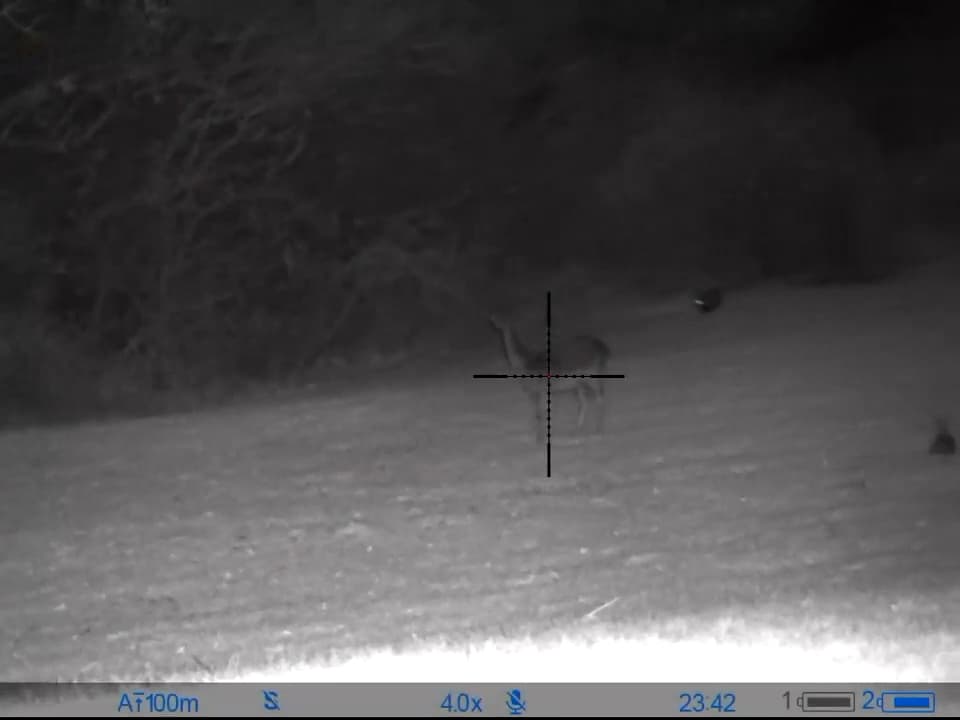
Night vision devices can be either active or passive. An active device uses an infrared light source that reflects light back from objects. Passive devices have no infrared light source and amplify the light already present. Newer generations of night vision devices use a photocathode which gives a much brighter image.
First-generation technology-based night vision devices are relatively cheap, but their main drawbacks are their small viewing distance and low reliability. First-generation night vision devices are sensitive to bright light and can be rendered inoperable if used during the day or against a bright light source.
[ux_products type=”masonry” col_spacing=”medium” columns=”3″ show_rating=”0″ show_add_to_cart=”0″ show_quick_view=”0″ ids=”240,4510,280″]
Thermal imaging cameras
Thermal imaging cameras are passive devices, have no infrared light source and detect infrared radiation in the range 3000-30000 nm. In principle, a thermal imaging camera is like a conventional infrared thermometer, except that instead of a single sensor, it has a matrix of sensors or a thermosensor. The more elements per area of the matrix (sensor), the sharper the image. As a rule, thermal imaging cameras allow you to choose between different image colour profiles (see video below).
Unlike night vision, the thermal imaging camera can also be used during the day. For example, in daylight, a thermal imaging camera makes it easy to distinguish an animal that has blended into the landscape for the human eye from the rest of its surroundings.
The video below gives a good overview of the general features of thermal imaging cameras using the Pulsar Helion XP as an example.
[ux_products type=”masonry” col_spacing=”medium” columns=”3″ show_rating=”0″ show_add_to_cart=”0″ show_quick_view=”0″ ids=”658,364,,4295″]
Lens vs sensor
The image quality of a thermal camera depends mostly on three elements - the lens, the sensor and the viewfinder. In turn, the quality of the lens and the light transmission depend on the efficiency of the sensor. The fewer distortions in the lens due to the inherent properties of the glass, the sharper and clearer the image will be on the sensor. The size and noise level of the sensor will in turn affect the quality of the resulting image. Thermal cameras are either low resolution (160×120 or 60×60, 80×80), medium resolution (320×240) or high resolution (640×480, 1024×768). The larger the sensor and the lower the noise level, the sharper and clearer the image.
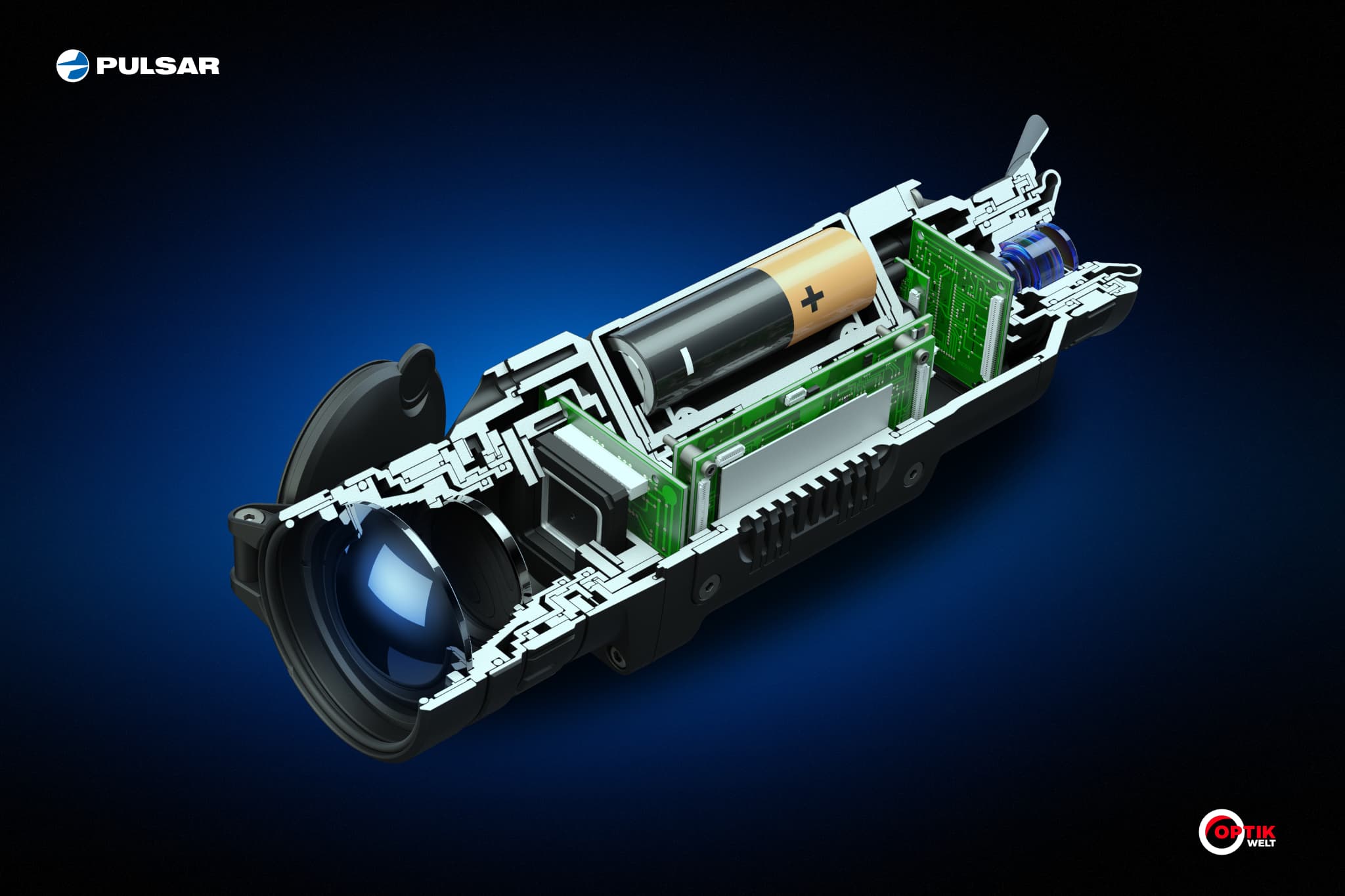
For thermal cameras, either LCOS or AMOLED screens are most common, with the latter offering significantly better image quality.
Broad or narrow perspective?
In turn, the magnification of the objective lens of the observation device determines the size of the field of view. Lenses with a higher magnification allow better detection and observation of distant objects because their field of view is narrower.

For herding and general wildlife observation, a lower magnification, or wide angle lens, may be more useful, as it allows you to view a larger area at a time. Some observing devices have either zoom lenses or interchangeable lenses (e.g. Pulsar Helion 2 XP Pro) .
Compact vs large
Almost all manufacturers offer a range of night vision devices, from compact to large.
For a compact night-vision device, small dimensions and minimum weight are essential. This, in turn, limits the size of both the optics and the sensor, i.e. small size is achieved at the expense of image quality. A compact night vision device is practical in situations where there is a need to move quickly and frequently, and portable equipment should not interfere with or impede movement. Compact night vision devices usually fit into a jacket or trouser pocket.
Larger, or more robust, night vision devices weigh more and take up more space, but they also tend to have better images because they use bigger sensors and better optics.
[ux_products type=”masonry” col_spacing=”large” columns=”2″ show_rating=”0″ show_add_to_cart=”0″ show_quick_view=”0″ ids=”1930,522″]
Weatherproofing
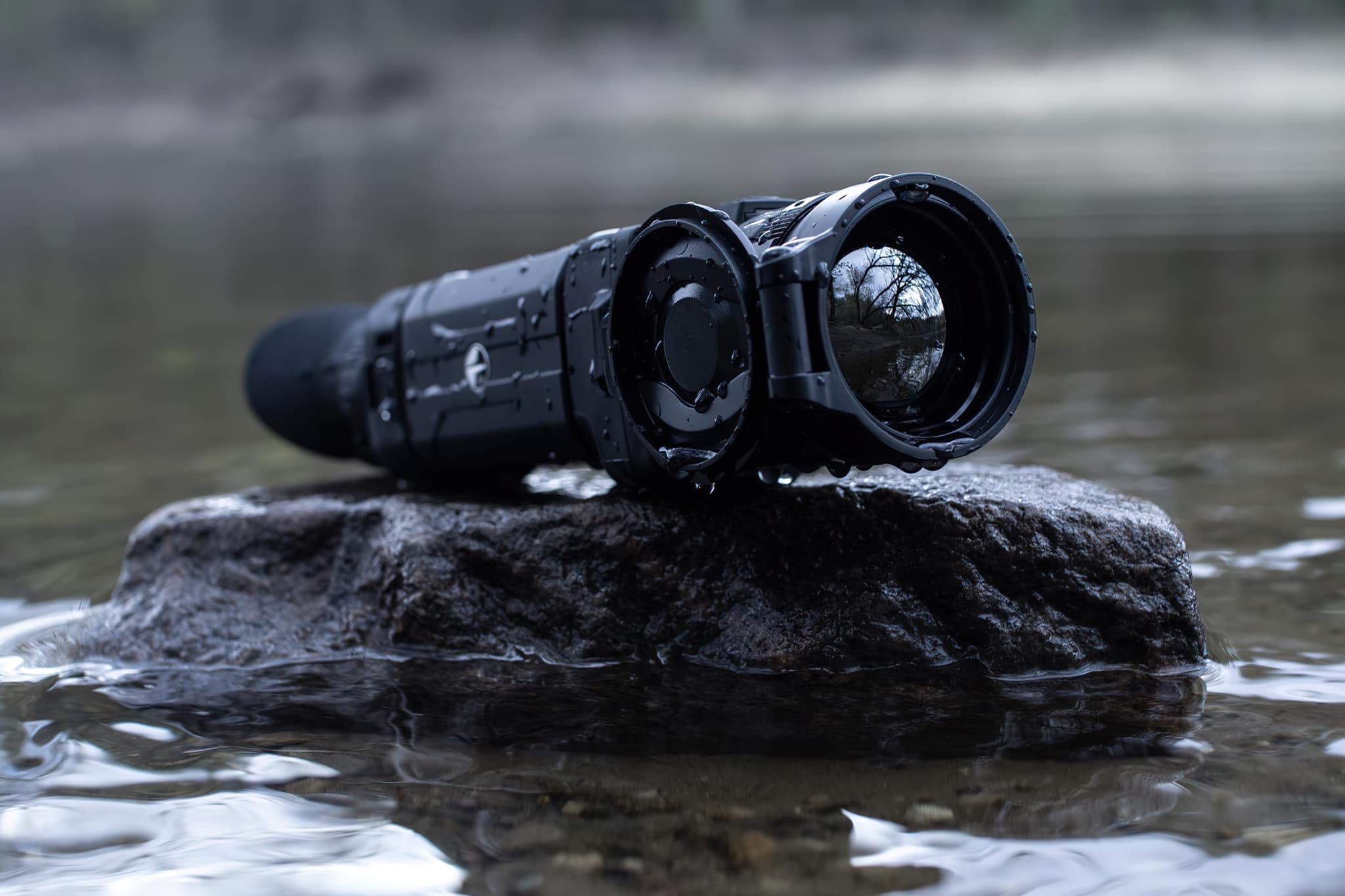
As night vision devices are used outdoors it is important that they are weatherproof. The more resistant to low and high temperatures and the more waterproof the night vision device is, the lower the risk of damage in severe weather conditions. Most Pulsar devices have an IPX7 (IEC 60529) weather rating, which means that the device will remain operational even after being submerged in water for up to half an hour.
Battery life
Battery life depends on how long you can watch continuously. Pulsar devices generally have replaceable batteries, i.e. their standard operating time can be extended either by using a larger battery or by replacing discharged batteries with full ones.
Professional vs standard
Most manufacturers classify their top models as professional. In the case of thermal imaging cameras, the PRO label usually means that. it can also be used to view in exceptionally difficult weather conditions, such as rain, snow or fog.. It also offers lower noise levels and a significantly sharper picture.
[ux_products type=”masonry” col_spacing=”large” columns=”2″ show_rating=”0″ show_add_to_cart=”0″ show_quick_view=”0″ ids=”658,4295″]
Monofunctional vs multifunctional
Optical devices can be classified as either single-function or multifunctional, depending on their design. Examples of single-function optical devices include a sight, a monocular or binoculars. A multifunctional night-vision device, however, can be used both as a sight and as a monocular, depending on whether it is attached to an optical sight or a viewfinder.
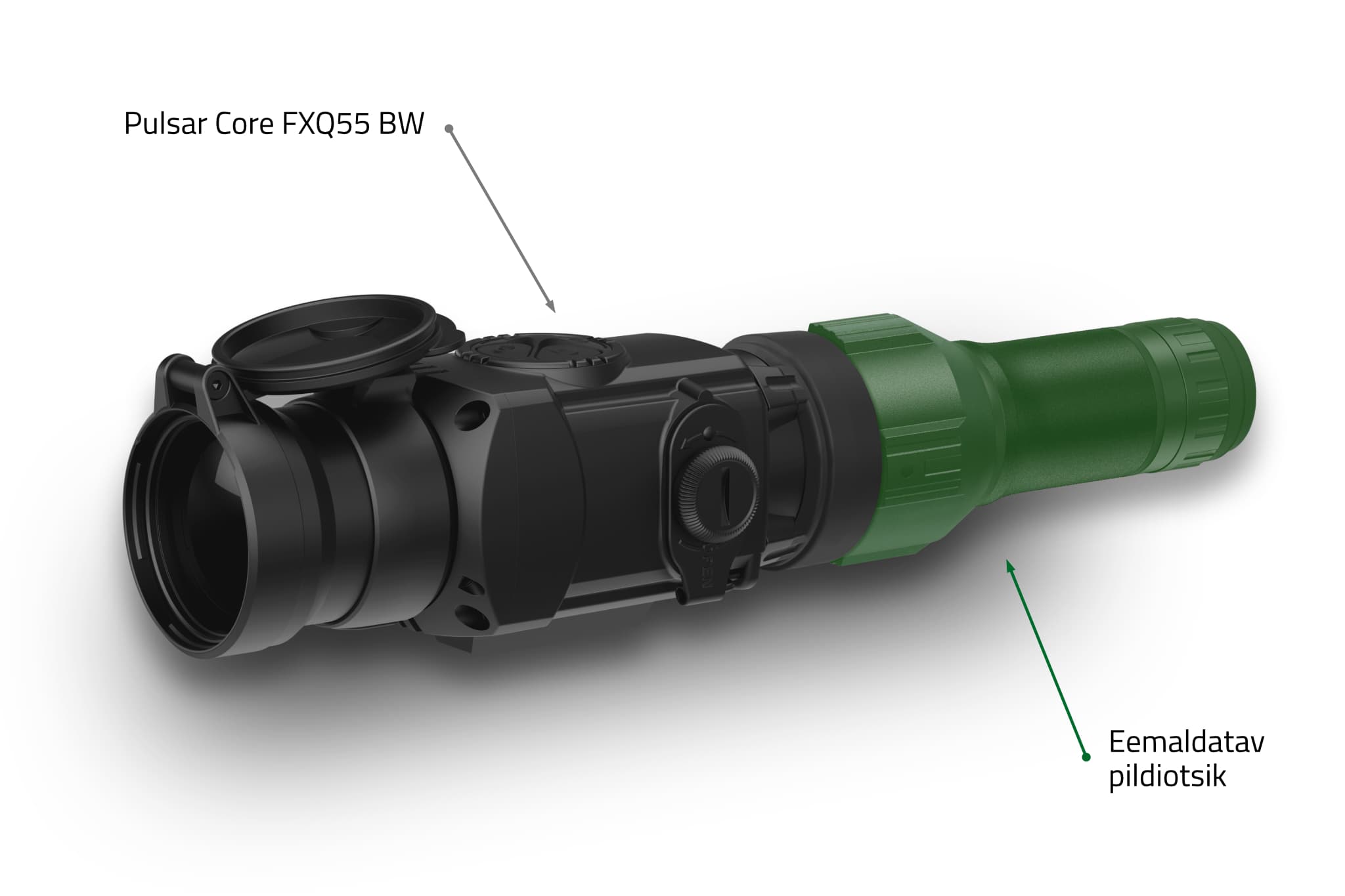
The advantage of a multifunctional night-vision device is that the same unit can be used for a variety of purposes. If you need to shoot in the dark, you can attach the device to a scope using an adapter. However, if you need to use the device for observation tasks, you must attach a viewfinder to it.
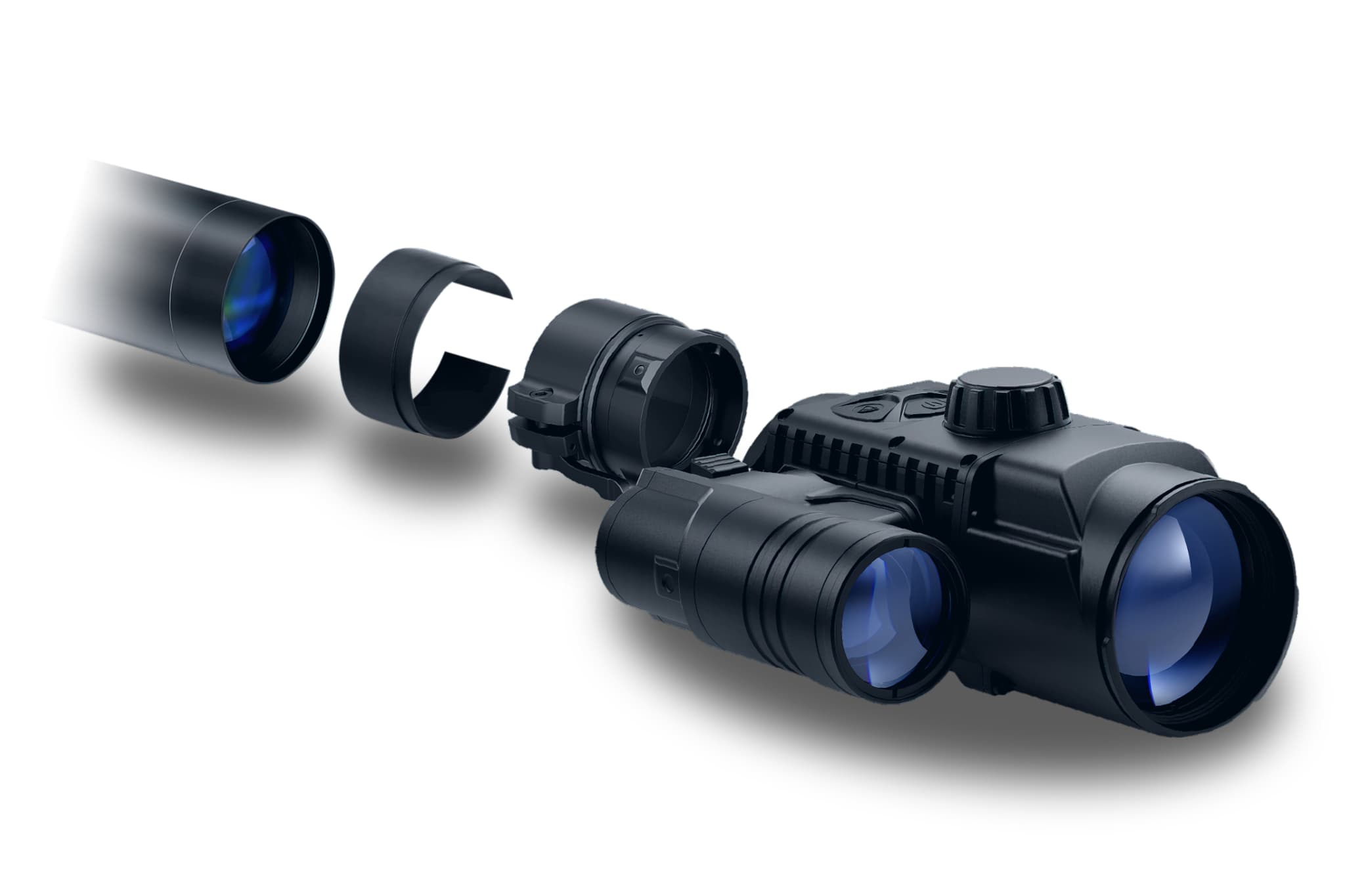
Please note! The use of night-vision goggles and thermal imaging devices is not permitted in Estonia; however, it is still possible to purchase and use a multifunctional night-vision device or thermal imaging camera as a monocular.
[ux_products type="masonry" col_spacing="medium" columns="3" show_rating="0" show_add_to_cart="0" show_quick_view="0" ids="280,424,,4208"]
Binoculars vs a monocular
In terms of design, night-vision devices are divided into binoculars and monoculars. Binoculars are designed for viewing with both eyes, whilst a monocular is designed for viewing with one eye. Both have their own advantages and disadvantages.
Many users have found that in situations where they need to alternate between observing their surroundings with the naked eye and through night-vision equipment, a monocular-type device is more comfortable for the eyes, as the eyes adapt better to the darkness. Binoculars create a ‘glare’ effect, so it takes a little time for the eyes to readjust to the darkness. At the same time, binoculars are more comfortable for long-term observation, e.g. night or sea watch, counting livestock, observing wildlife behaviour from an observation tower, etc.
[ux_products type="masonry" col_spacing="large" columns="2" show_rating="0" show_add_to_cart="0" show_quick_view="0" ids="364,516"]
Rifle scope vs. monocular/binoculars
It is not possible to aim in the dark using a standard optical sight without additional lighting; in other words, an additional light source would need to be attached to the weapon. However, the light source may in turn disturb the animals being hunted, causing them to flee from the hunter’s field of vision. Furthermore, additional lighting devices are not sufficient for accurate aiming.
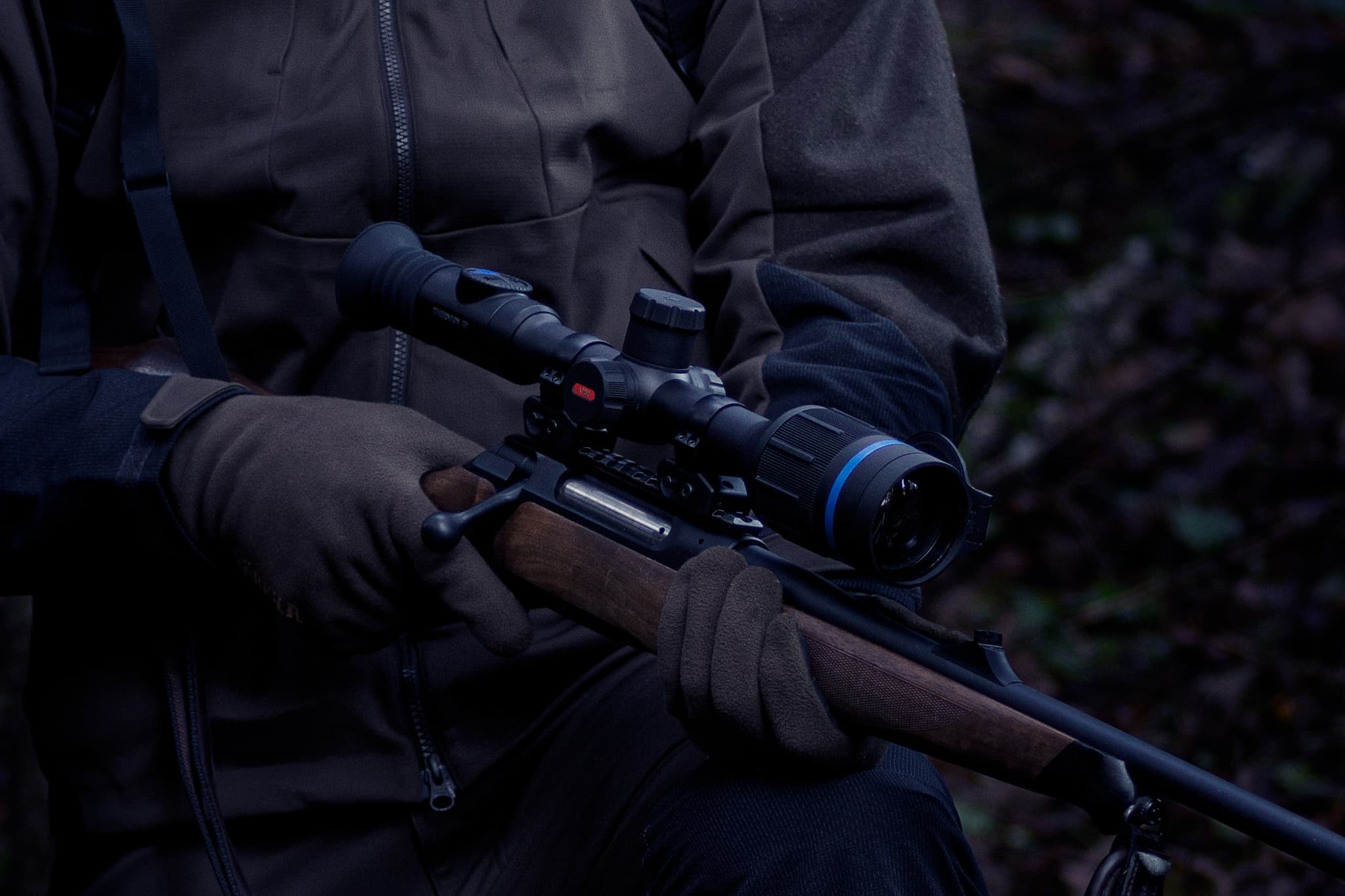
Night vision and thermal imaging scopes enable hunters to take game in the dark with great accuracy and without the need for additional lighting that might disturb the animals or give away the hunter’s position. In countries where night vision devices are permitted, thermal imaging devices are used during the day to hunt animals that are hiding in thickets or grassy areas and which, as a result, cannot be distinguished from their surroundings at all, or at least not clearly, with the naked eye.
Under current legislation, the use of night-vision goggles is not permitted in Estonia, although there are no substantive grounds for banning them. More detailed information on this subject can be found in the article “Is the ban on night-vision goggles appropriate and reasonable?“.
Night vision equipment with a laser rangefinder
Even in daylight, it is difficult to determine the exact distance to objects with the naked eye, but this is even more challenging at night. Manufacturers have therefore begun to equip night-vision devices with laser rangefinders. In most cases, laser rangefinders have a measuring range of up to 1 kilometre and a maximum error of ±1 metre at longer distances.
However, as a bullet from a firearm does not travel in a straight line—its trajectory is affected by factors such as the Earth’s gravitational pull and wind speed—the exact distance of the target is important for the shooter so that they can take the bullet’s deviation into account when aiming.
[ux_products type="masonry" col_spacing="large" columns="2" show_rating="0" show_add_to_cart="0" show_quick_view="0" ids="1956,623"]
Photo and video recording
Sometimes, simply observing is not enough; it is also necessary to document what has been observed, which is why some devices are equipped with photo and video recording functions. The recorded images can be reviewed later and further observations made. You can also share the recordings with friends, acquaintances or other nature enthusiasts. In some cases, the recordings may prove necessary for resolving legal disputes.
Video streaming
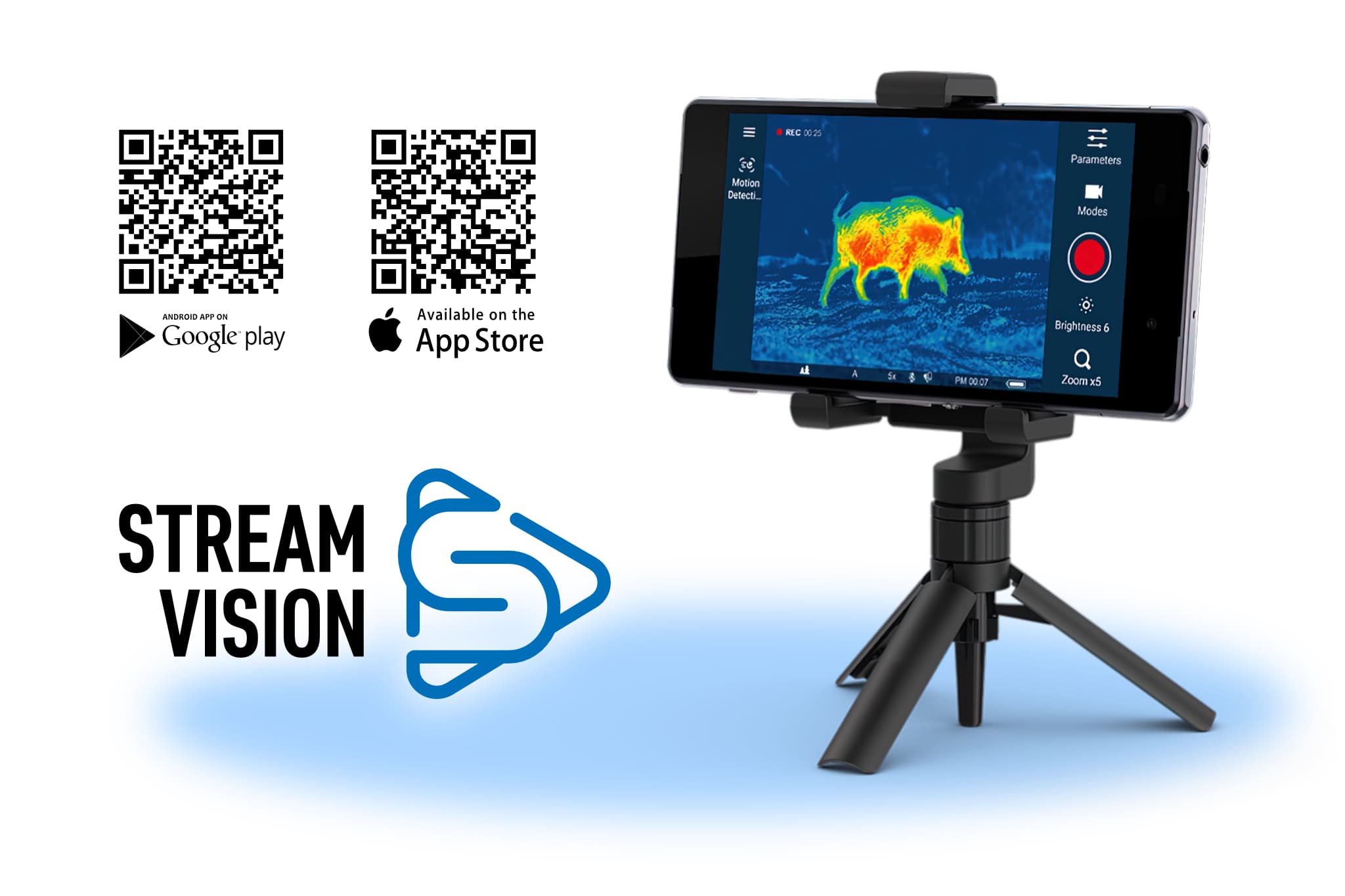
In addition to photo and video recording capabilities, manufacturers now also offer the option of live video streaming via platforms such as YouTube. This makes it possible to share the surveillance device’s feed with others in real time. Surveillance devices with live streaming capabilities can also be used effectively in unmanned observation posts.
[ux_products type="masonry" col_spacing="large" columns="2" show_rating="0" show_add_to_cart="0" show_quick_view="0" ids="1930,4289"]
Compatibility with smart devices
Compatibility with smart devices makes the camera easier to use, allowing you to download photos and videos to your smart device, configure the camera, update the firmware, or view the live feed on your smart device’s screen.
What should you bear in mind when making a choice?
We have outlined above the main criteria for choosing night vision equipment. The quality of each component or the availability of additional features will in turn affect the price of the surveillance device, so a compromise must be made between features and price when making a choice. You should always prioritise image quality, weather resistance and battery life, and on that basis choose the solution that best suits your budget.
If it is important that the device can be used around the clock, you should opt for a thermal imaging camera, as this makes it easy to detect animals that blend into their natural surroundings, even during the day.
If you also go hunting in other countries, including those where the use of night vision devices is permitted, it might be a good idea to opt for a multifunctional thermal imaging camera, which you can use as a spotting scope in Estonia but attach to your optical sight when abroad, thereby turning it into a night vision device.
Buy on hire purchase
High-end night-vision devices and thermal cameras aren’t exactly the cheapest on the market, which is why Optikwelt offers the opportunity to purchase a device on hire purchase. This way, you can get your hands on the device you’ve been longing for today, whilst spreading the cost over a longer period.
Comments
Feel free to share your thoughts and comments on our Facebook post: How do you choose a night-vision device?