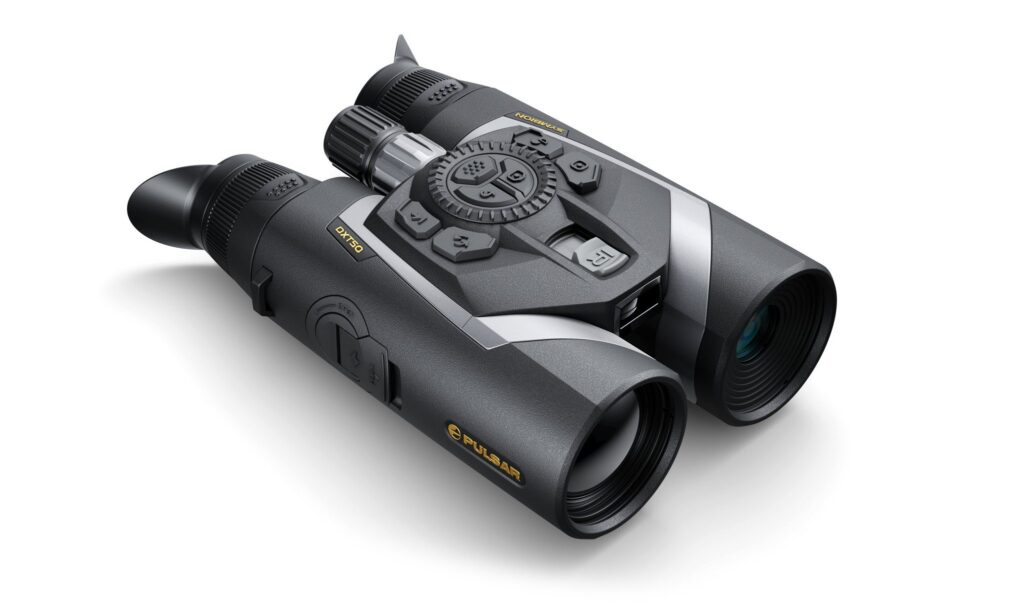
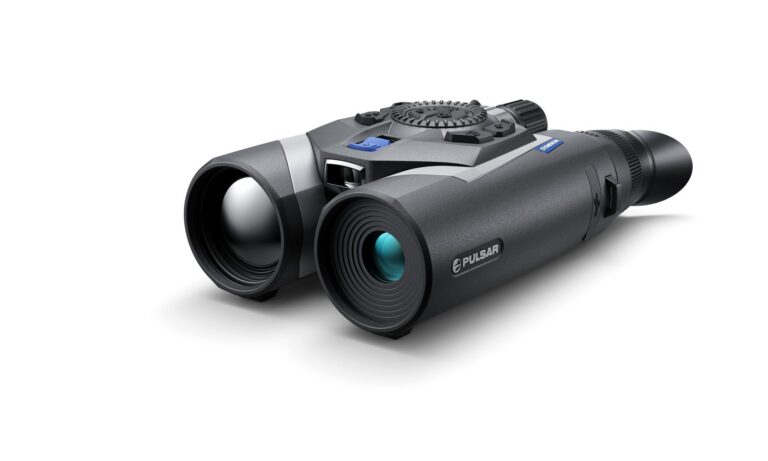
Pulsar Symbion LRF DXT50 thermal and digital binoculars
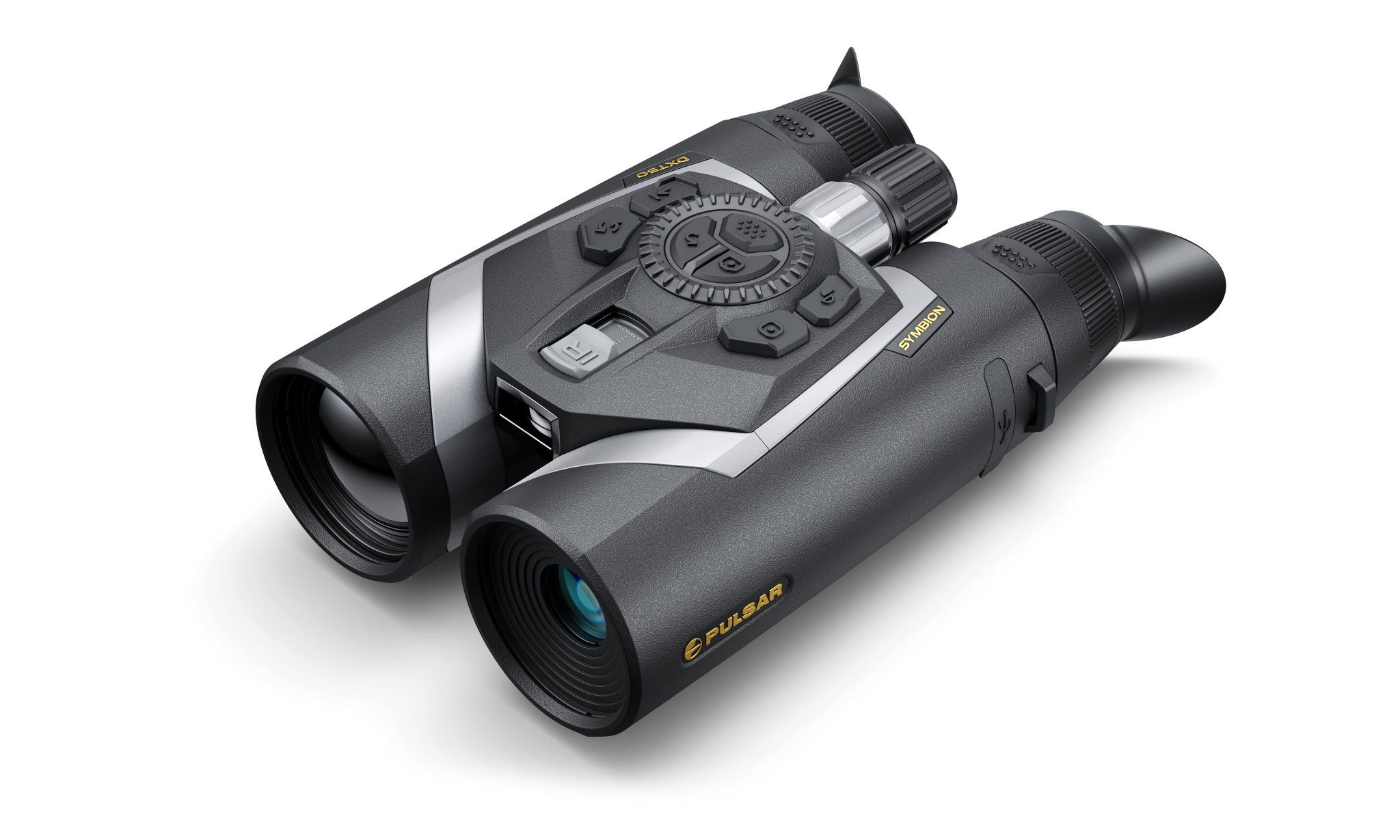
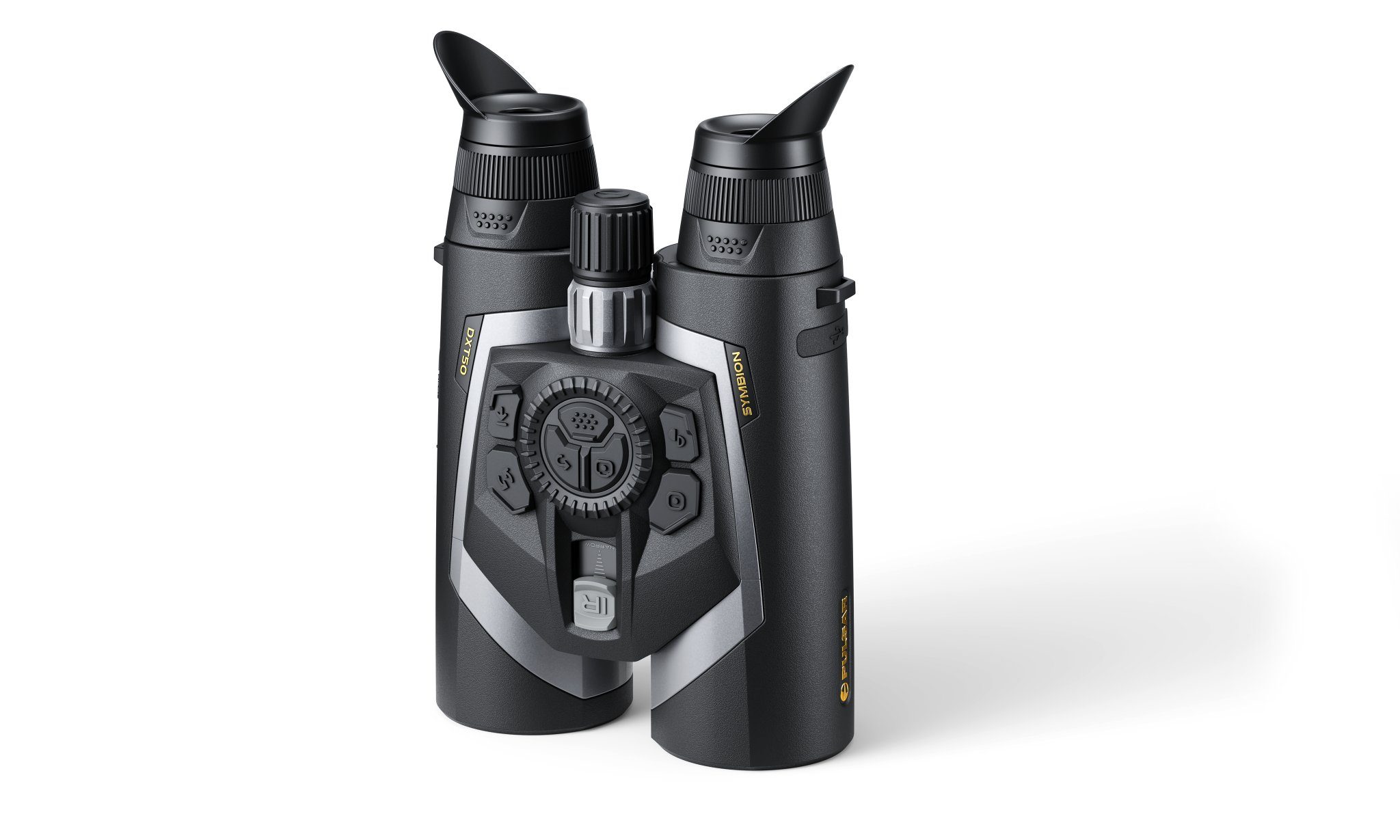
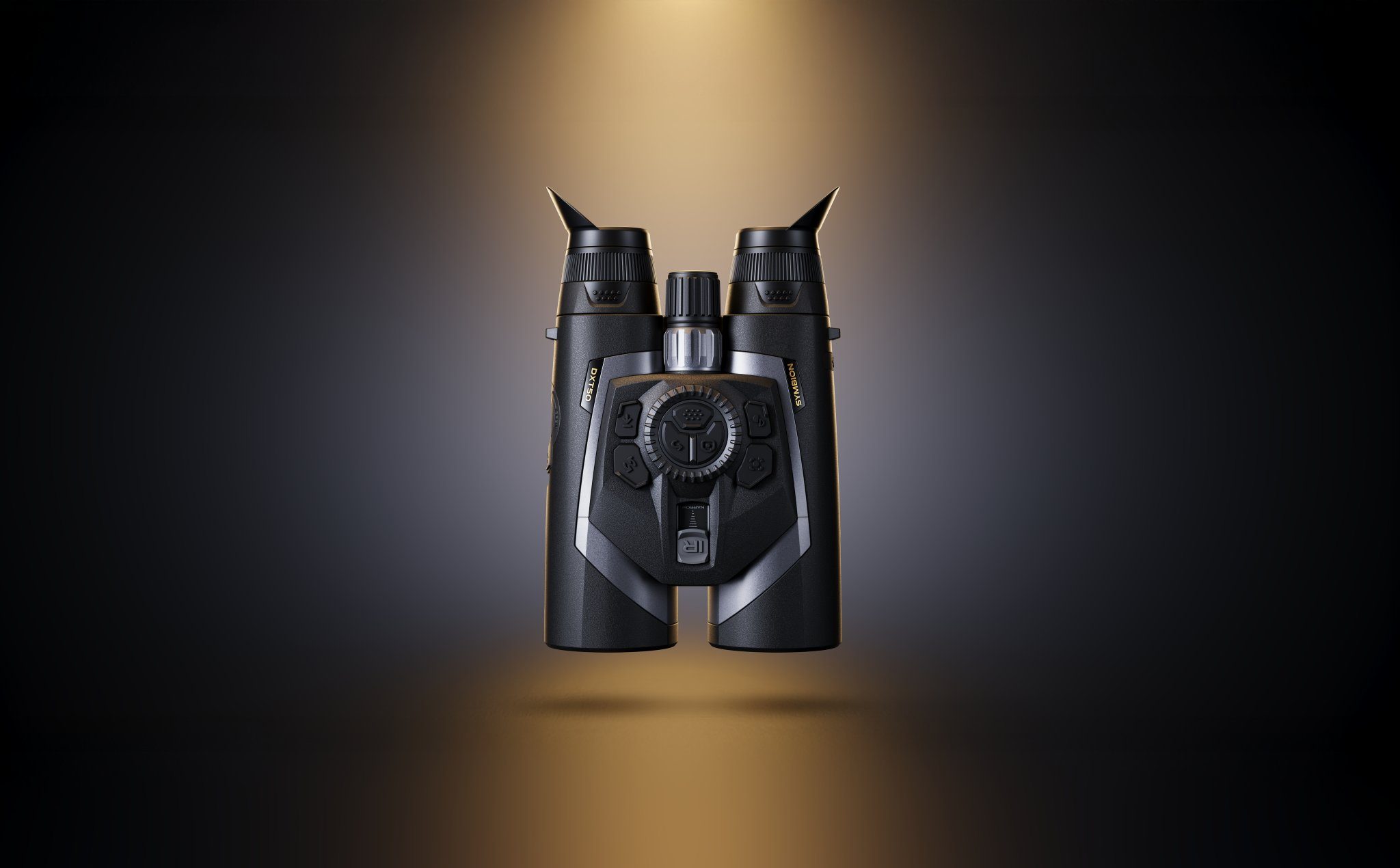
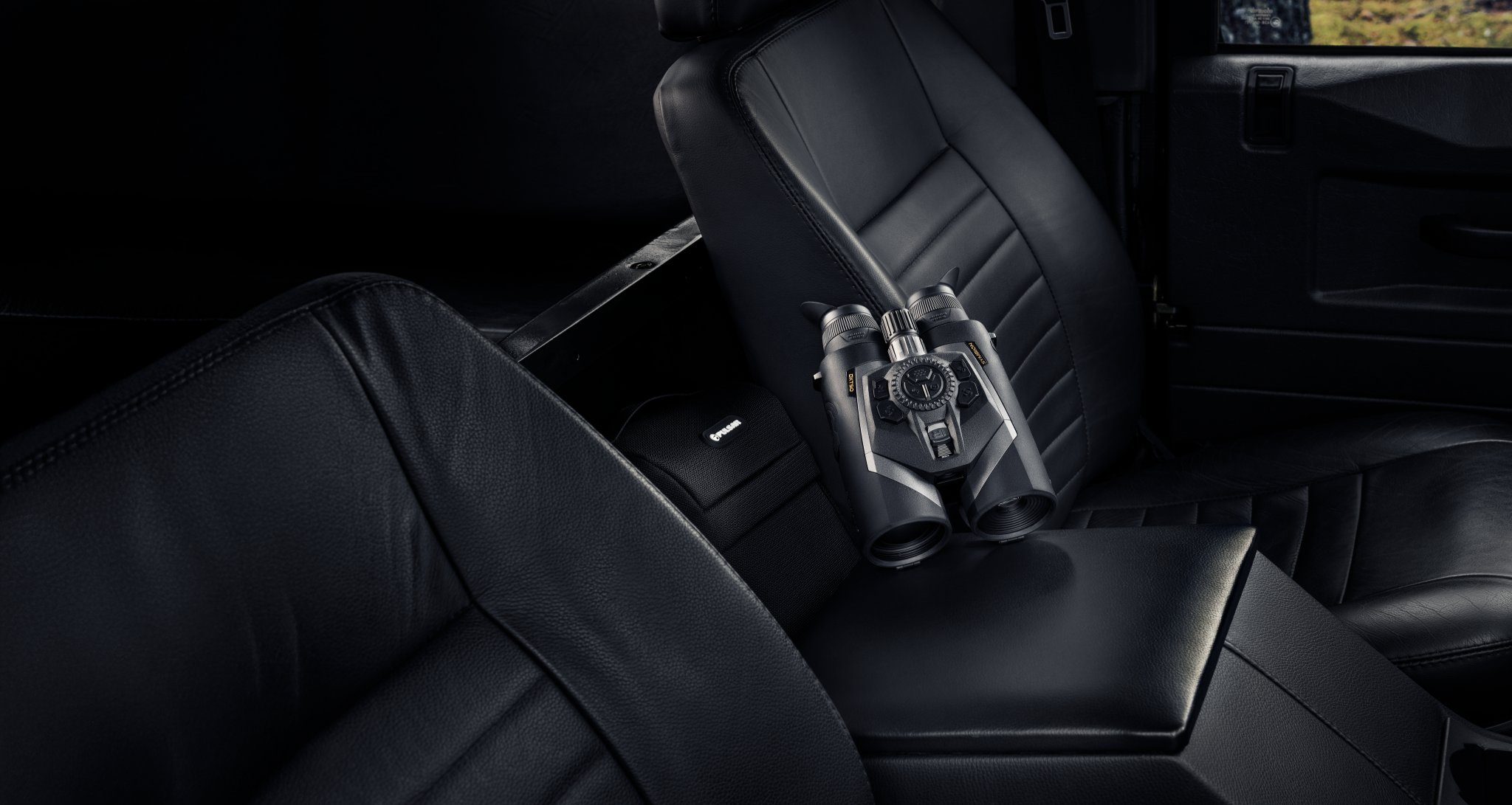
The Pulsar Symbion LRF DXT50 is a powerful system that combines thermal and digital binoculars in one and is equipped with a laser rangefinder and an infrared illuminator.
- Sensor: 1280x1024/12µm (thermal) | 3840x2160 (digital)
- Lens: F50/1.0 (thermal) | Digital F50/1.8 (digital)
- NETD: ‹35 mK (system ‹20 mK)
- Magnification: 2-24x (thermal) | 6.5-26x (digital)
- Screen: 1920×1080 (FullHD)
- Detection distance: 2300m
- Angle of view: 17,5° (thermal) | 5,8° (digital)
- Field of view @100m: 30,7m (thermal) | 10,2m (digital)
- Rangefinder: Laser, ‹=1500 m
- Battery life: ~8h (2xAPS5)
2 in stock
Powerful two-in-one system – thermal and digital binoculars
The Pulsar Symbion LRF DXT50 is a specialised system that combines both thermal and digital binoculars and is equipped with laser rangefinder and an infrared illuminator.
The Symbion has two viewing modes:
- Digital camera – the 4K digital image works well both in daylight and at dusk. With it you can see the landscape, trees, animals and details almost as with ordinary good binoculars, only the image is very clear and detailed. Thanks to the built-in infrared illuminator, the digital camera performs better at dusk than ordinary optical binoculars.
- Thermal camera – a premium HD-quality thermal image shows heat-emitting objects, even when it is dark, foggy or rainy, or when they are hidden in foliage. Animals, people and other warm objects stand out clearly, regardless of the light.
Who is the Symbion LRF DXT50 for, and what is it for?
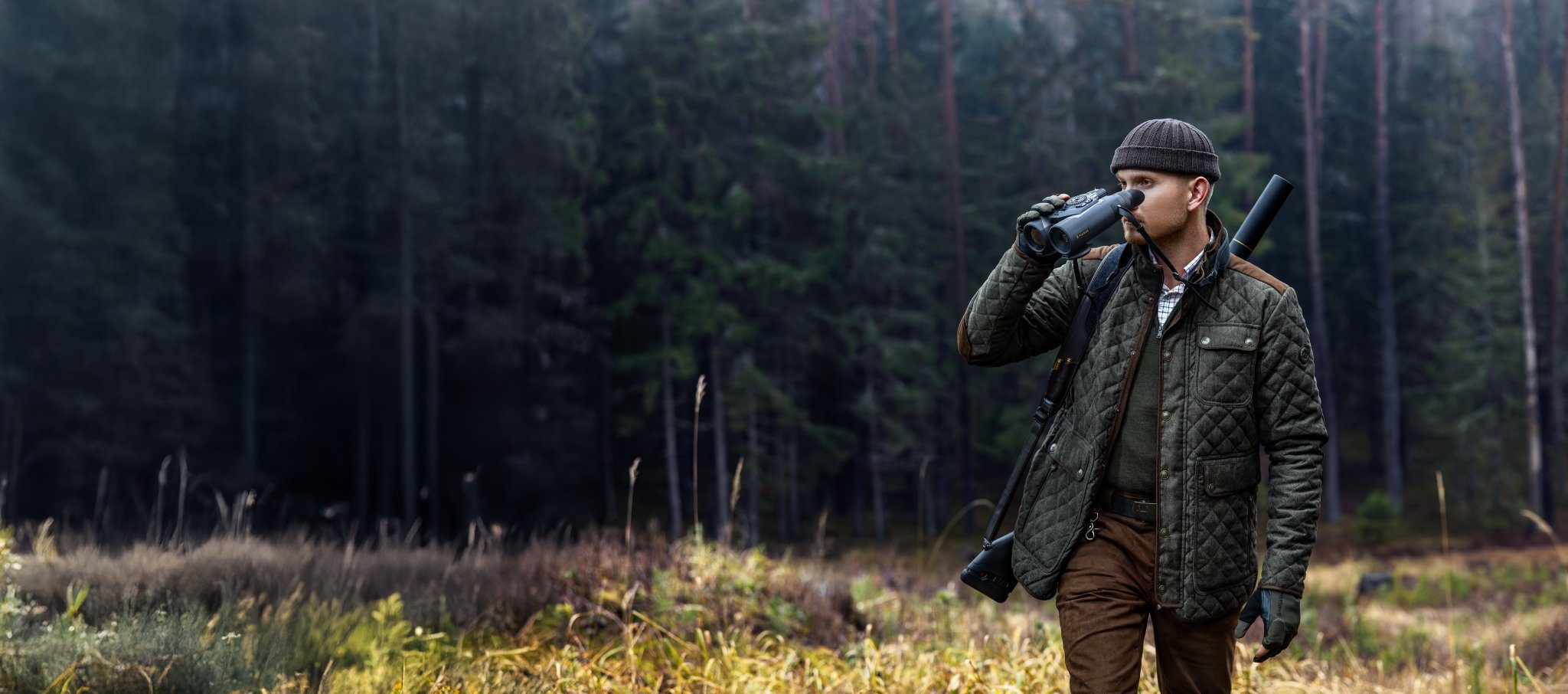
The device is designed for professionals and for those who spend a great deal of time outdoors and need excellent image quality in a wide range of conditions. The Symbion is suitable, for example, for farmers, smallholders, hunters, wildlife observers, search and rescue workers, security and defence professionals, or anyone who wants to find their way confidently in the outdoors.
The Symbion performs reliably: by day, at dusk, in total darkness, and in fog, rain and cold (withstands temperatures from –25 to +50 degrees). The Symbion's housing is made of strong magnesium, is waterproof and withstands drops and heavy use. The device is comfortable to hold and adjust with one hand.
Features of the Symbion day and night binoculars
Below we take a look at the Pulsar thermal and digital binoculars Symbion LRF DXT50 and their most important features. The list is not in order of importance.
Two different images from the same device, even at the same time
You can view the thermal image or the digital image, or even both at the same time using the picture-in-picture function – one view is shown in the larger image and the other in a small window. This helps you quickly understand whether the heat source really is a living creature and exactly what it is.
1. Colour digital image
By day, the digital image gives a pleasantly sharp and detailed colour picture. At dusk, the digital image stays good considerably longer than the naked eye or ordinary binoculars could manage. At night, the digital image switches to black and white or a high-contrast picture. In complete darkness, the built-in infrared illuminator improves the digital image significantly. The digital image is well suited to identifying an animal or object more precisely – for example, telling whether it is a wild boar, an elk or something else.
2. Detailed thermal image
The thermal image needs no light at all. It shows warm objects (animals, people, vehicles). Even when it is dark, foggy or rainy, or an animal is hidden among branches and leaves, its heat still shows through. This is especially good for finding animals or people quickly and tracking their movements.
Digital image possible even at night – switch on the infrared illuminator
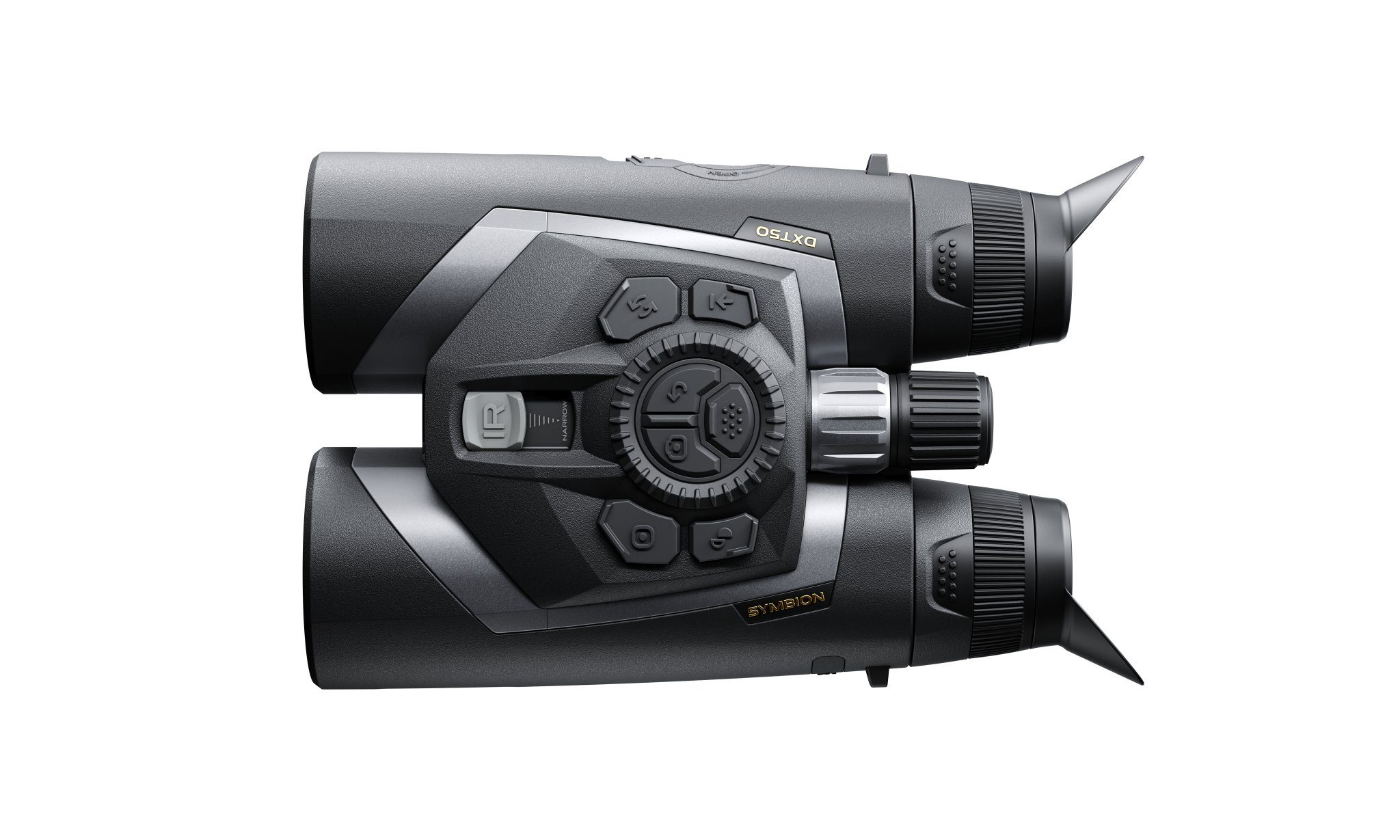
The human eye cannot see infrared light, but image sensors are able to detect it. The Symbion uses an infrared illuminator to improve the digital image in the dark. The light can be set stronger or weaker (three levels) and the beam width can be adjusted. For nearer objects you can choose a weaker light, for more distant ones a stronger one. The thermal image does not need or use this illuminator.
With a laser rangefinder you won't misjudge distance
The device has a built-in laser rangefinder. Experienced wildlife observers know what an indispensable aid a laser rangefinder is, because the human eye can misjudge distance not just by tens but even by hundreds of metres. At the simple press of a button you instantly know how far away an object is. Distance can be measured either once or automatically, continuously scanning the range.
The image stabiliser makes observing a pleasure
No human hand is ever 100% steady, so at higher magnifications or on the move every hand movement and micro-tremor starts to affect the image. The image stabiliser keeps the picture steady so that it does not jump or shake. This reduces blurring and makes extended viewing much more comfortable.
Comfortable one-handed operation
The buttons and focus wheels are positioned so that the device is easy to hold and adjust even with one hand . It suits both right- and left-handed users. This way you do not have to keep using both hands or put the device down to change the settings.
Built to work and last in the Nordic climate
The housing is made of a lightweight yet strong magnesium alloy. The device is waterproof and dustproof. It withstands temperatures from –25 to +50 degrees. This means the device can cope with rain, snow, dust and large temperature fluctuations.
The battery lasts for many hours
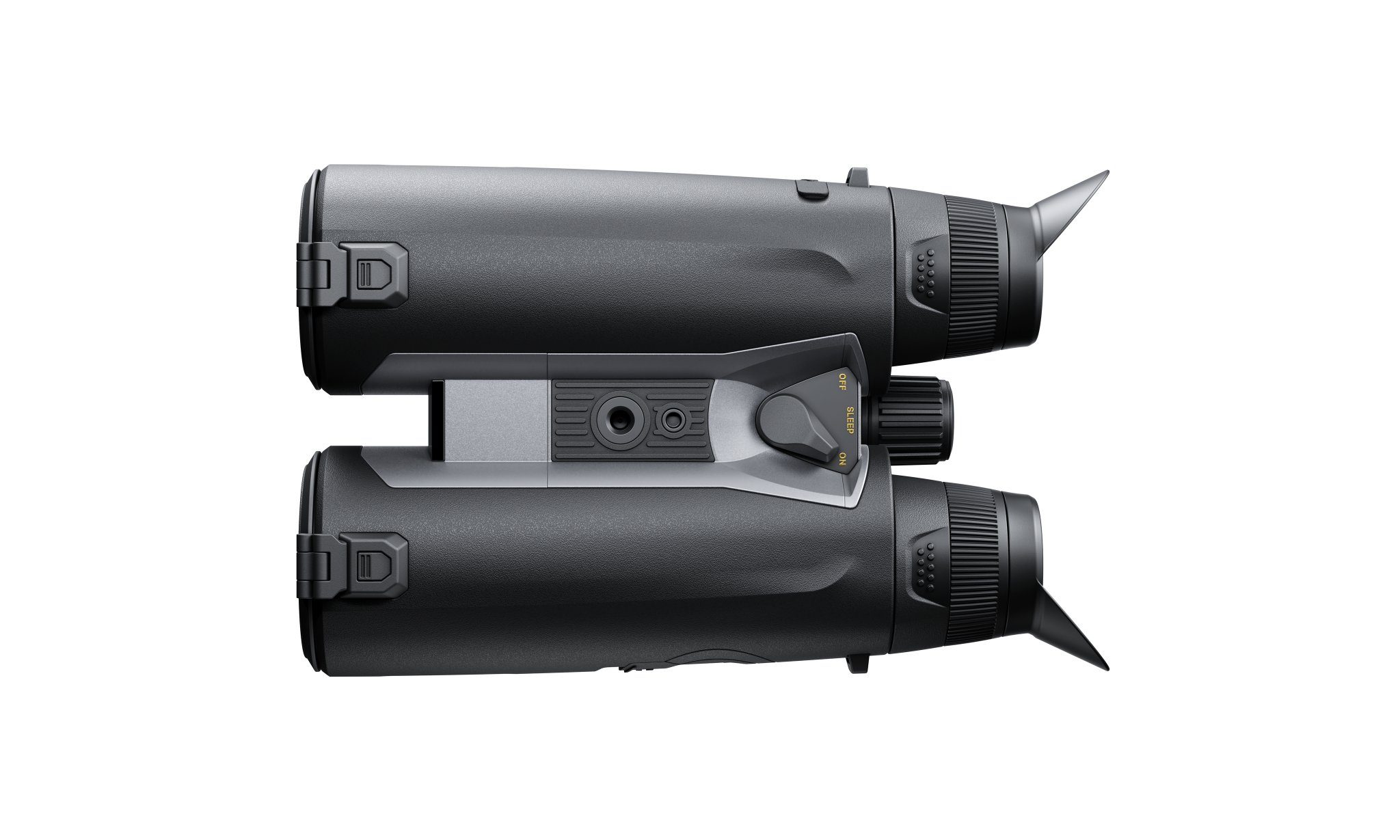
The device runs on interchangeable batteries. When one runs flat, you can swap in the other. Battery life is about 8–10 hours depending on the model and usage. There is also a sleep mode that saves the battery when the device is not in use. If needed, it can also be powered via an external USB-C cable.
Save what you see as a photo or video
You can take photos and record video with sound directly to the device. The built-in memory is 64 GB, which is plenty. This is useful if you want to document something. and review it later. It is also important in the work of search, rescue, security and defence professionals.
Share the camera image with others
The device can be connected to a phone. You can stream the live image from the device to your phone screen and later review recordings or use helper apps. For example, there is an app for determining the bullet trajectory. Through the app you can share the camera image with others.
Other useful features
- Screen brightness and sensitivity can be adjusted to suit the conditions.
- The menu is simple and clear, so you can use it without the user manual.
- A choice of image modes for the digital image.
- A choice of image modes for the thermal image.
- The device can be mounted on a tripod when you need to observe from one spot for a long time.
Summary
The Symbion is for those who need to see reliably and for long periods outdoors or at night. In one device it gives you a colour daytime image, a good night image, a thermal image, distance measurement and image stabilisation. Everything is designed to make the device as simple, reliable and comfortable to use as possible, even in harsh conditions. You no longer depend on light or weather, and you can understand more quickly what is happening around you.
In the box
Pulsar Symbion LRF DXT50 Package contents:
- Symbion LRF DXT50 thermal and digital binoculars,
- two APS 5 batteries with protective caps,
- APS 5 battery charger,
- power adapter,
- USB Type-C cable with USB Type-A adapter,
- carrying bag,
- neck strap,
- harness,
- cleaning cloth,
- quick-release tripod adapter,
- user manual and
- warranty certificate.
| Sensor | 1280×1024/12µm (thermal), 3840×2160 (digital) |
|---|---|
| NETD | ‹35mK |
| sNETD | ‹20mK |
| Lens | F50/1.0 (thermal), F50/1.8 (digital) |
| Enlarge | 2-24 (thermal), 6,5–26× (digital) |
| The field of vision | 10,2m @100m (digital), 17,5° (thermal), 30,7m @100m (thermal), 5,8° (digital) |
| Detection distance | 2300 m |
| Image stabilizer | Yes |
| Distance meter | Laser ‹=1500m (±1 m) |
| IR luminaire | 850 nm, 3 power levels, focusable |
| Screen | AMOLED 1920×1080 |
| Frame rate | 50 Hz |
| Colour palettes | 9 |
| Internal memory | 64 GB |
| Jathan | photo, stream, video 1440x1080 |
| Wi-Fi | 2.4 / 5 GHz |
| Body | magnesium sulphate |
| Class of protection | IP67 |
| Operating temperature | –25°C…+50°C |
| Battery | 2 × APS5 |
| Battery life | up to 8 h |
| Dimensions | 207×132×72mm |
| Weight | 1000 g (with battery) |
Similar products
 Sale
Pulsar Merger LRF XP50 thermal imaging camera
 Sale
Pulsar Symbion LRF DXR50 thermal and digital binoculars
 Sale
Pulsar Accolade XP50 thermal imaging camera
 Sale