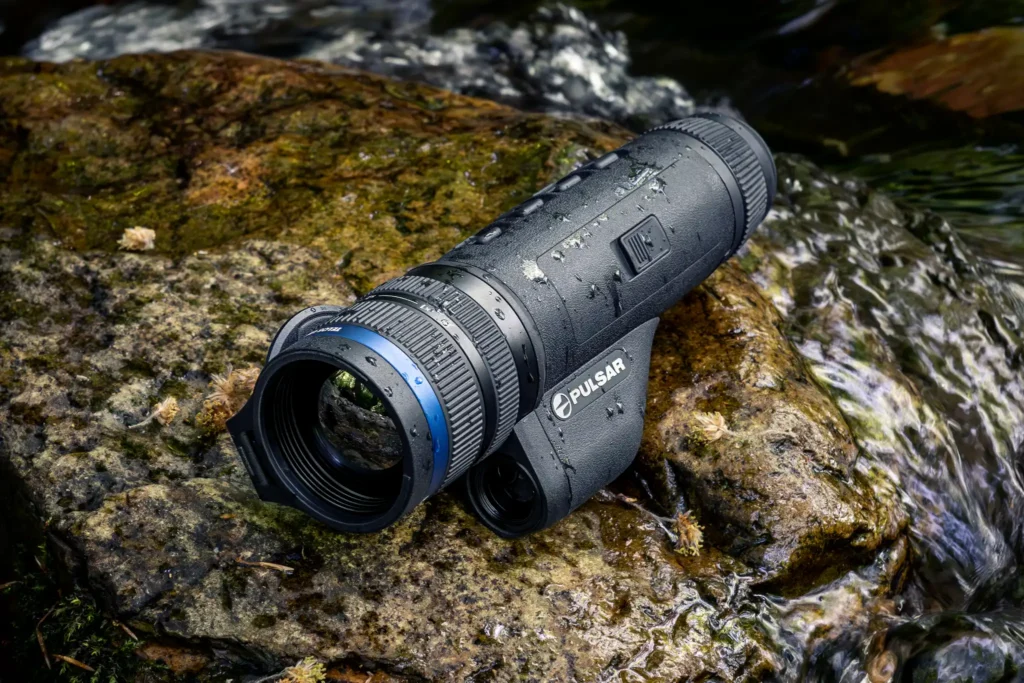
Pulsar Telos LRF XP50 thermal imaging camera
The Pulsar Telos LRF XP50 is the model with the most sensitive sensor in the series, combined with a laser rangefinder. A wide field of view, NETD below 18 mK and distance measurement up to 1000 metres with an accuracy of one metre.
- Sensor: 640×480, 17 µm
- Lens: F50/1.0
- NETD: <18 mK (system <15 mK)
- Magnification: 2.5–10× (Zoom Boost up to 20×)
- Field of vision: 12.4° × 9.3° (21.8 m at 100 m)
- Detection distance: 1800 m
- Rangefinder: laser, up to 1000 m (±1 m)
- Battery life: up to 8,5 h
3 in stock
Pulsar Telos LRF XP50 thermal monocular
The Telos LRF XP50 is the version of the XP50 with a laser rangefinder. The sensor with 17 µm pixels has a sensitivity below 18 mK, which according to Pulsar is the best in the entire Telos series, and the animal stays distinct from the background even in fog, rain and damp air. The laser rangefinder shows the distance up to 1000 metres at the press of a button.
Laser rangefinder and ballistics
Accuracy is ±1 m. The laser is Class 1 (905 nm) and eye-safe. You load the ballistic calculator data from the Stream Vision Ballistics app.
Field of view and magnification
The field of view is 21.8 m at 100 m and the base magnification is 2.5×, so it is easy to scan a forest edge. Magnification can be increased up to 10×, and up to 20× in Zoom Boost mode. The image stabiliser keeps the picture steady. The detection range for a deer-sized animal is 1800 m.
Display, recording and app
1024×768 AMOLED display, 64 GB of internal memory, video with sound and picture-in-picture mode. The device connects to the Stream Vision 2 app via Wi-Fi.
Battery and weather
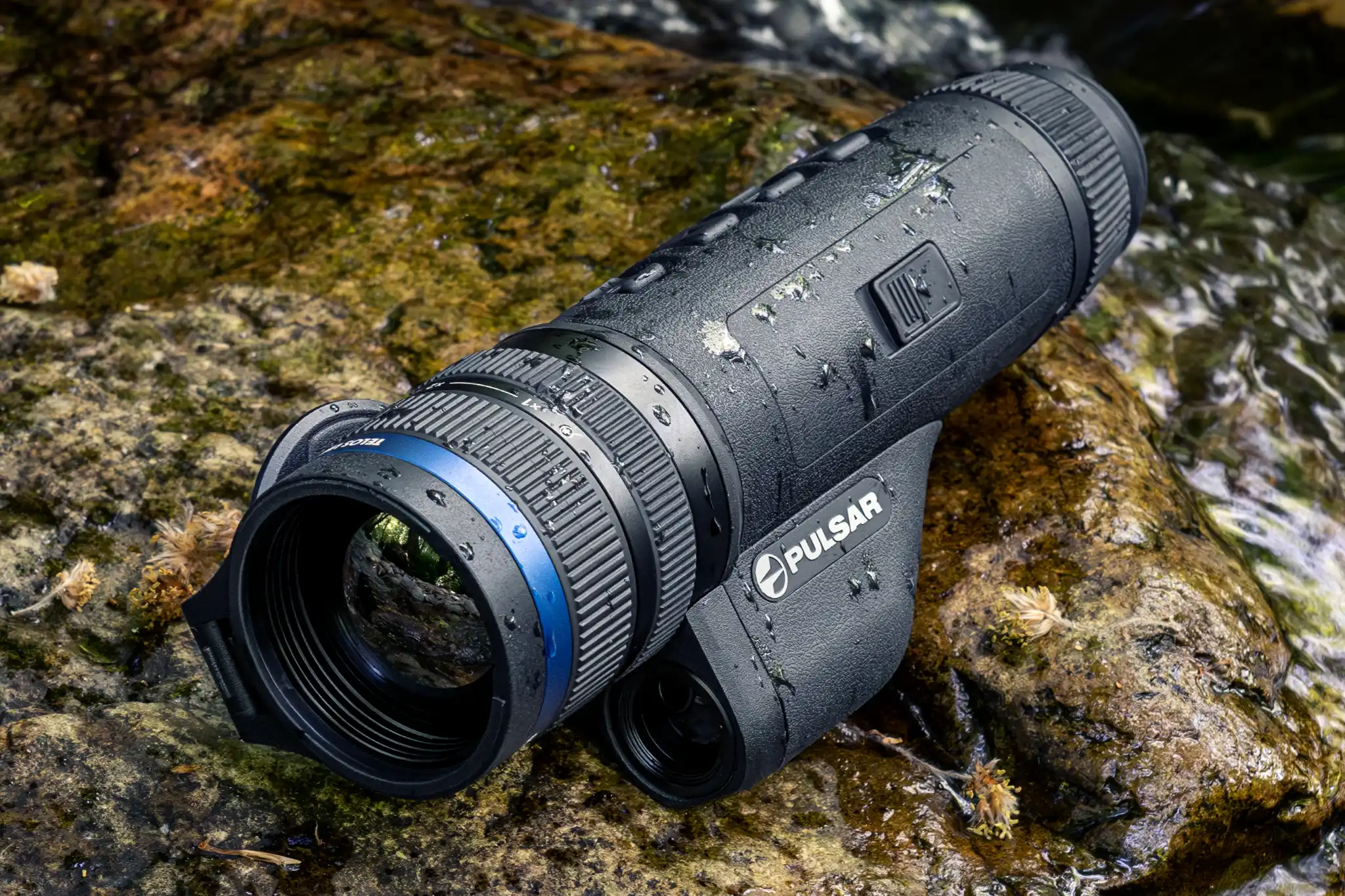
The LPS 7i battery gives up to 8.5 hours of operating time; frequent use of the rangefinder and Wi-Fi shortens this. Charging is via USB-C cable or wireless. The housing is waterproof to IPX7, operating temperature is –25 to +40 °C, and weight with battery is 720 g.
Comparison with other Telos models
If you do not need the rangefinder, the Telos XP50 is more affordable. With an HD sensor (1024×768) and a wider field of view, there is the Telos LRF XL50. The flagship of the series is the Telos LRF XT50.
In the box
- Pulsar Telos LRF XP50 thermal monocular
- LPS 7i battery with protective cap
- power adapter
- USB Type-C cable with USB Type-A adapter
- carrying bag
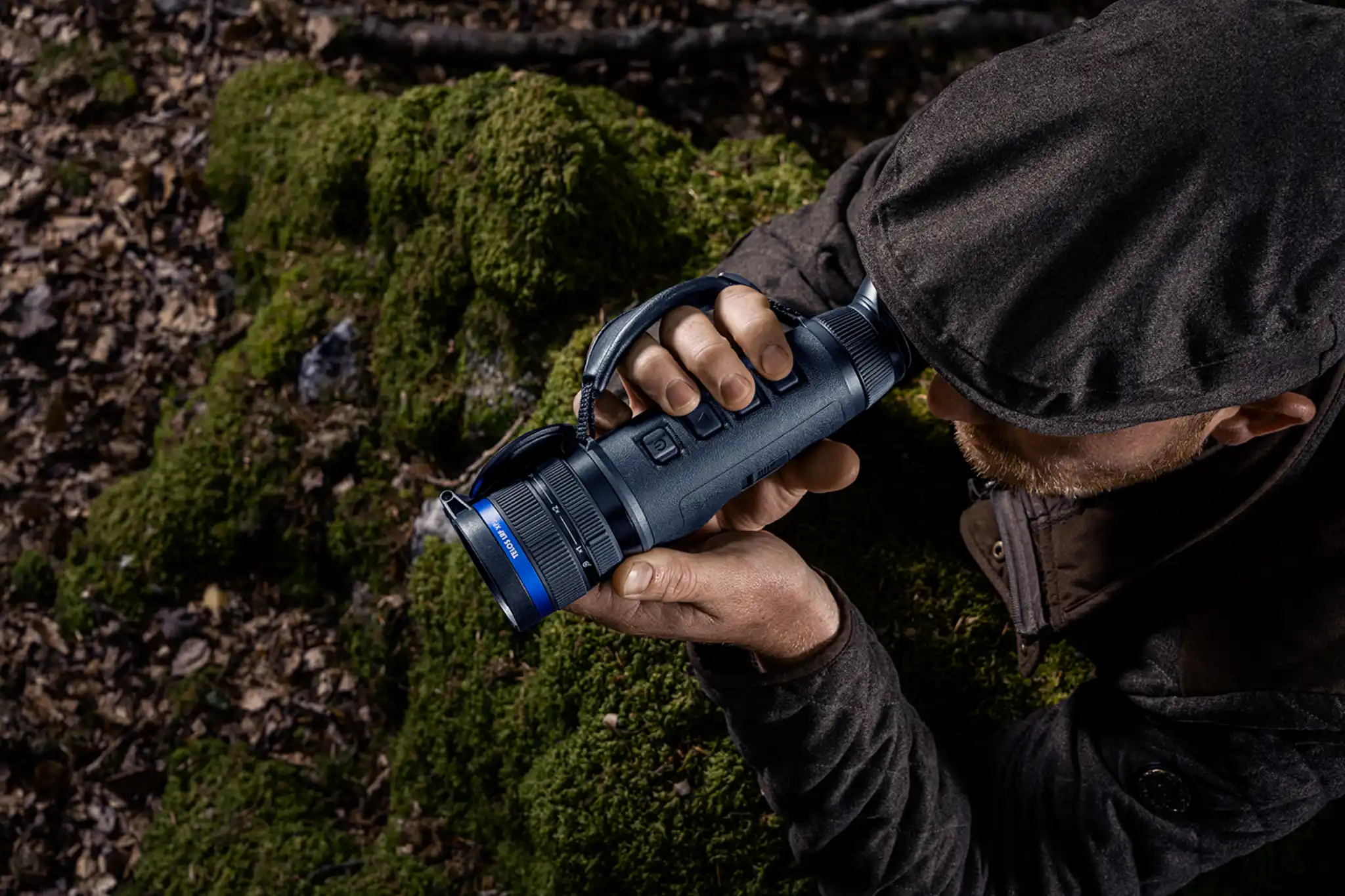
- hand strap
- user manual
- lens cleaning cloth
- warranty card
Frequently asked questions
How accurate is the rangefinder? According to the manufacturer, ±1 m up to 1000 metres. With a small or poorly reflective target, the measuring range is shorter.
Does the sensor sensitivity really make a difference? Yes, especially in damp weather. When the air is foggy or it is raining, temperature differences become smaller, and with a less sensitive sensor the animal blends into the background.
What does a detection range of 1800 m mean? It is the distance at which the device shows a deer-sized animal as a heat spot. To identify the species, the animal needs to be several times closer.
Can the Telos be mounted on a rifle? No. The Telos is a handheld observation device.
| Sensor | 640×480@17µm |
|---|---|
| NETD | ‹18mK |
| sNETD | ‹15 mK |
| Lens | F50/1.0 |
| Enlarge | 2.5–10× (Zoom Boost up to 20×) |
| The field of vision | 12.4°×9.3° / 21.8m @100m |
| Detection distance | 1800 m |
| Image stabilizer | Yes |
| Distance meter | Laser ‹=1000m (±1 m) |
| IR luminaire | - |
| Screen | AMOLED 1024x768 |
| Frame rate | 50 Hz |
| Colour palettes | 9 |
| Internal memory | 64 GB |
| Jathan | photo, video with sound 1024×768 |
| Wi-Fi | 2.4 / 5 GHz |
| Body | polymer |
| Class of protection | IPX7 |
| Operating temperature | –25°C…+40°C |
| Battery | LPS7i Li-Ion 6400 mAh |
| Battery life | up to 8,5 h |
| Dimensions | 238x72x90mm |
| Weight | 720 g |
Similar products
 Sale
Pulsar Telos XG50 thermal imaging camera
 Sale
Pulsar Telos LRF XL50 thermal imaging camera
 Sale
Pulsar Telos XQ35 thermal imaging camera
 Sale